The back story
Canary Wharf: from the docks to a financial capital, the back story
From Caribbean sugar docks to towers of finance, The O2 and a cable car over the Thames.

Photo Credit
Image courtesy of © King of Hearts · CC BY-SA 4.0 via Wikimedia CommonsFor 180 years ships unloaded the world’s cargo on the Isle of Dogs. When the docks closed, the water stayed and the towers came: Canary Wharf grew into London’s second financial district, with The O2 and a cable car across the river.
The West India Docks
Opened in 1802, the West India Docks gave London its first enclosed dock. They were built by merchants trading with the Caribbean, to handle the sugar and other goods of its slave plantations, a history that London Museum Docklands, in one of the original warehouses, tells in full.
The docks were almost a kilometre long, with moorings for 500 vessels, and were walled like a fortress, with a moat and their own police. By 1900 cargo arrived from across the world, and in 1936 a new warehouse was built for fruit and vegetables from the Canary Islands: the original Canary Wharf.

Photo Credit
Image courtesy of © Fred Romero from Paris, France · CC BY 2.0 via Wikimedia CommonsA financial district rises
The docks were busiest in the 1960s, but as shipping moved out of London they closed in 1980. From the late 1980s the quays were rebuilt as a second financial district, keeping the water of the old docks between the towers.
Its centrepiece, One Canada Square by César Pelli, was completed in 1991. At 235 metres, with its pyramid top, it was the tallest building in the UK until The Shard of 2012. Banks and global firms followed, and today towers ring Canada Square and Cabot Square, while Wood Wharf, to the east, adds a waterside neighbourhood of homes and offices.

Photo Credit
Image courtesy of © Garry Knight from London, England · CC BY 2.0 via Wikimedia CommonsShops and the waterside
Beneath and between the towers, more than 120 stores spread across five malls: Canada Place, Cabot Place under its glass dome, Churchill Place, Crossrail Place and Jubilee Place. Crossrail Place Roof Garden and Jubilee Park add green space, and on West India Quay the Georgian warehouses hold restaurants and London Museum Docklands, open daily 10am–5pm.
The O2 across the river
Across the Thames on the Greenwich Peninsula, the white dome built for the millennium celebrations of 2000 reopened in June 2007 as The O2. Its arena stages the major concerts and shows, and around it are restaurants, bars, the Outlet shops, the smaller indigo at The O2 venue and Up at The O2, a climb over the roof.

Photo Credit
Image courtesy of © mattbuck (category) · CC BY-SA 3.0 via Wikimedia CommonsAround the dome, the Greenwich Peninsula is being developed as a new neighbourhood with thousands of homes, offices and shops, linked to the riverside path.

Photo Credit
Image courtesy of © Lewis Hulbert · CC BY-SA 3.0 via Wikimedia CommonsThe cable car
The London Cable Car crosses the Thames between the Greenwich Peninsula, beside The O2, and the Royal Docks on the north bank. Cabins arrive every 30 seconds and climb to 90 metres above the river; the crossing, just over a kilometre, usually takes about ten minutes. Booking ahead online saves money on selected dates.
The original Canary Wharf was a 1936 warehouse for fruit from the Canary Islands.
Getting there
The Jubilee line, extended east in 1999, reaches Canary Wharf from London Bridge in 7 minutes and Westminster in 13, and runs on to North Greenwich for The O2. The Elizabeth line, opened in 2022, links its own Canary Wharf station with Liverpool Street in 6 minutes, Tottenham Court Road in 12 and Paddington in 17, and the DLR stops at Canary Wharf and Heron Quays, 11 minutes from Bank.

Photo Credit
Image courtesy of © The wub · CC BY-SA 4.0 via Wikimedia CommonsOn the river, Uber Boat by Thames Clippers calls at Canary Wharf pier, about 30 minutes from Waterloo, and at North Greenwich for The O2, so you can arrive by water from Westminster, the South Bank or Battersea.
Our advice: come downriver by Uber Boat, browse Cabot Place and the roof garden, then take the Jubilee line one stop to North Greenwich for a show at The O2, and ride the cable car at dusk to see the towers lit up across the water.
Why it's on our list
- The West India Docks
- A financial district rises
- Shops and the waterside
- The O2 across the river
- The cable car
- Getting there
Location
The map comes from Google Maps, which sets its own cookies once it loads.
More in depth
 The back storyKing’s Cross and Coal Drops Yard: the regeneration storyHow derelict railway lands became one of London’s most admired new neighbourhoods.
 The back storyTowers, wharves and power stations: London’s new architectureFrom Lloyd’s to The Shard and Battersea: how London’s skyline has changed since the 1980s.
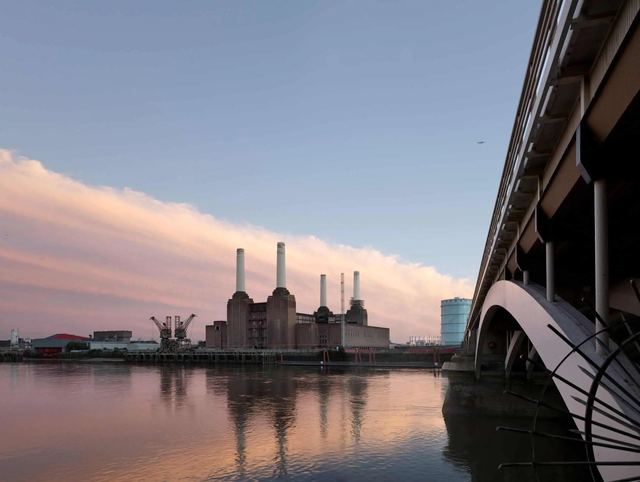 The back storyBattersea Power Station: the concept behind the restorationRebuilt chimneys, hand-made bricks, two turbine halls: the thinking behind a great restoration.