Objects of Desire
Sixty millilitres and a buried shaker: London and the Martini
The IBA’s Dry Martini, the Savoy’s buried shaker, Dukes’ frozen glasses and a Mayfair trolley.
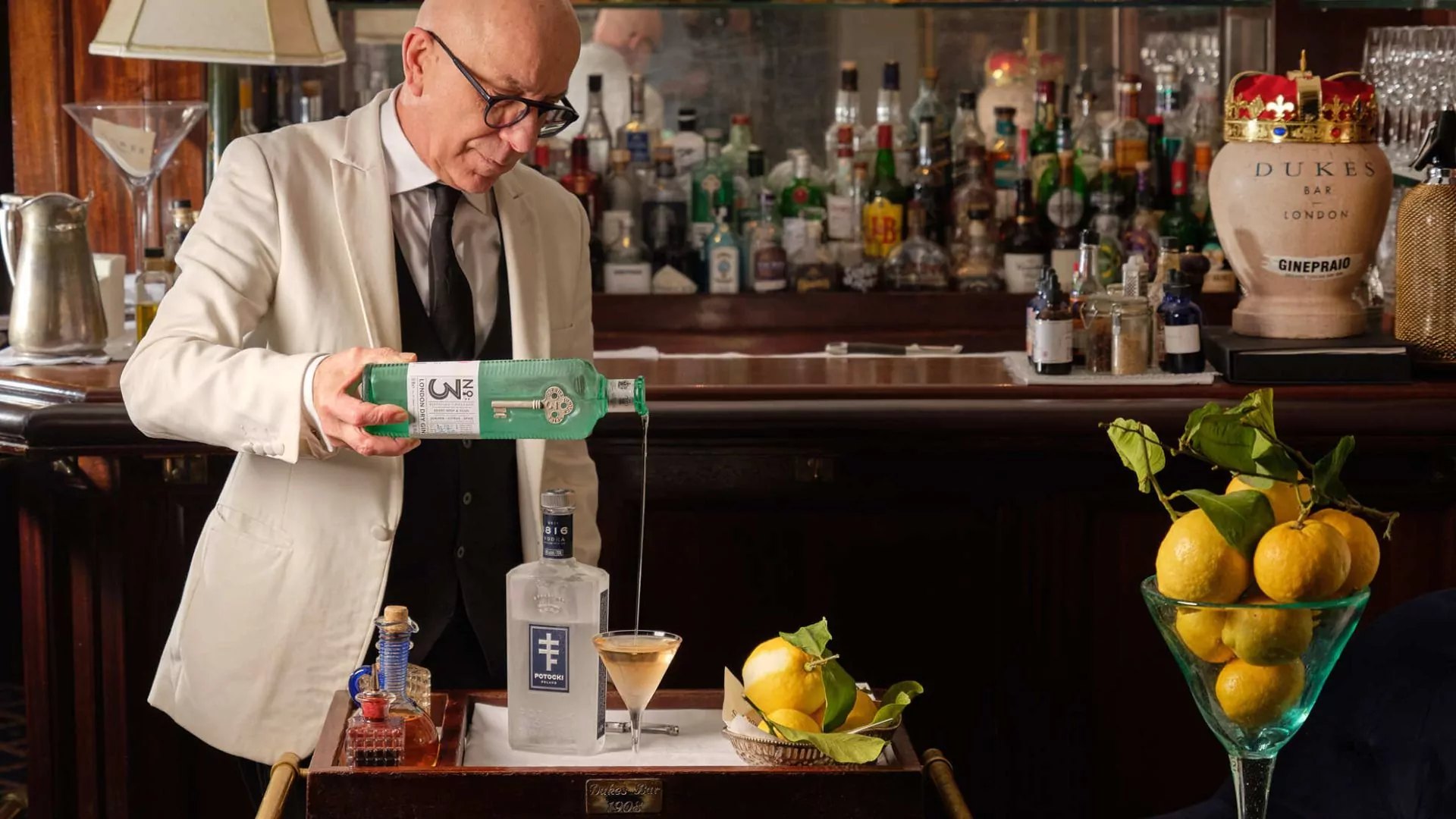
Photo Credit
Image courtesy of © Dukes LondonWhy does one of the simplest drinks in the book inspire so much ceremony in London? Because the city’s great hotel bars have spent more than a century turning gin and vermouth into theatre. Here is the classic as the International Bartenders Association writes it, and the bars that made it famous, from their own pages, checked in November 2026.
The recipe, exactly
The International Bartenders Association gives the Dry Martini as 60 ml of gin and 10 ml of dry vermouth. Pour both into a mixing glass with ice cubes, stir well and strain into a chilled martini glass. Squeeze the oil from a lemon peel over the drink, or garnish with green olives if requested.
That is the whole recipe, and the reason the arguments never end: with two ingredients there is nowhere to hide. Every great London bar keeps its own proportions, glassware and temperature, and every guest arrives with a view on olives.
A shaker in the wall
The American Bar at The Savoy opened in 1893 and calls itself the oldest serving cocktail bar in London. Ada Coleman, its first female head bartender, arrived from Claridge’s in 1903 and stayed 23 years. Asked by the actor Charles Hawtrey for something with a bit of punch, she mixed gin, sweet vermouth and a couple of dashes of Fernet-Branca, and he named it the Hanky Panky.
Coleman had learned her craft at Claridge’s, where she mixed her first cocktail, a Manhattan, in 1899; her father had worked for the D’Oyly Carte family, who owned the Savoy group. At The Savoy she served royalty, stars and the merely thirsty with equal charm, in a profession that was then almost entirely male.
Her successor, Harry Craddock, became head bartender in 1925, created the White Lady and in 1930 published The Savoy Cocktail Book, still a manual for bartenders; his guests included Ava Gardner, Charlie Chaplin and Errol Flynn.

Photo Credit
Image courtesy of © Anthony O'Neil · CC BY-SA 2.0 via Wikimedia CommonsIn 1927, during a refurbishment, the hotel asked him to leave an unpoured White Lady in a shaker in a gap in the new construction; the concrete was poured over it, and nobody has found it since. Somewhere under the Strand, a cocktail is ageing very slowly.
Somewhere under the Strand, a cocktail is ageing very slowly.
The Hanky Panky is still served there to the original recipe, with vintage gin, vintage sweet vermouth and vintage Fernet-Branca. The Savoy has no formal dress code but asks guests to dress elegantly, and sports jerseys are not allowed.
Frozen glasses, no ice
In St James’s Place, Dukes Bar has been part of the neighbourhood since 1908. Its Martinis come in frozen glasses with spirits colder still and, famously, no ice, which the bar says preserves every nuance of flavour. Alessandro and his team keep the tradition; the bar opens from 3pm to 10pm, Monday to Saturday, on a walk-in basis, and guests must be 18 or over.
The dress code is smart casual: no sportswear, shorts or T-shirts, though a short-sleeved collared polo shirt passes. It is a small room and a strong drink, so a second Martini here is a decision rather than a reflex.
The trolley
In Mayfair, The Connaught Bar brings the Martini to you. Its black lacquer Martini Trolley arrives at the table set with hand-etched crystal glasses, slow-frozen ice and the makings of your favourite version, and you choose one of the bar’s aromatic bitters to finish it: the most elegant argument yet for staying in your seat.
Our advice: make the IBA version at home first, so you know the baseline, then let The Savoy, Dukes and The Connaught each show you what they do differently. Arrive early in the evening, dress the part, and order the second round slowly.
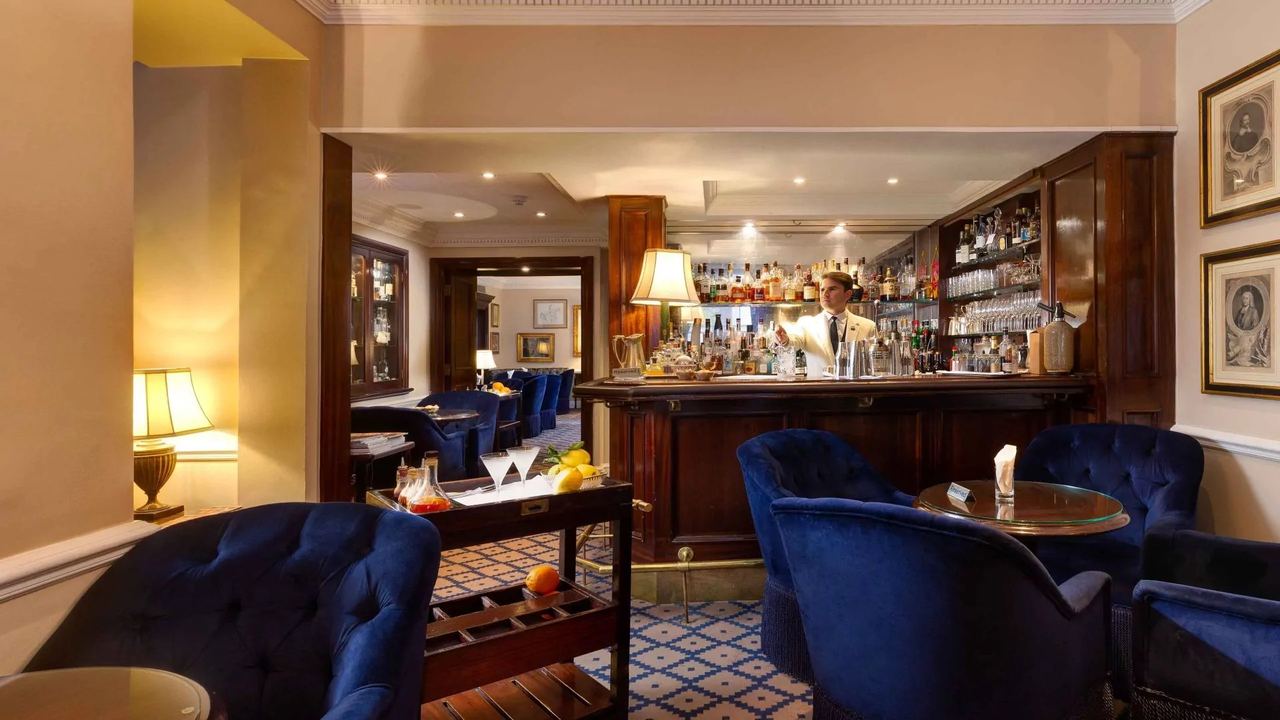
Photo Credit
Image courtesy of © Dukes LondonWhy it's on our list
- The recipe, exactly
- A shaker in the wall
- Frozen glasses, no ice
- The trolley
Location
The map comes from Google Maps, which sets its own cookies once it loads.
More in depth
 Objects of DesireLess parked than crouched: the electric Jaguar and the new supercarsJaguar’s Type 00 and Type 01, Ferrari’s first electric car and the record-breakers around them.
 Objects of DesireCrouched on Berkeley Square: London’s hypercar mileBerkeley Square’s showrooms, the airman who founded H.R. Owen, and the veteran run at dawn.
 Objects of DesirePianos, cellars and Studio One: how London learned to listenA hall built to sell pianos, a jazz cellar that moved up the street, and Elgar at Abbey Road.