LIVERY COMPANY · CITY OF LONDON · CHARTER 1327
The Goldsmiths’ Company
Great Twelve company on its Foster Lane site since 1339, where hallmarking began.
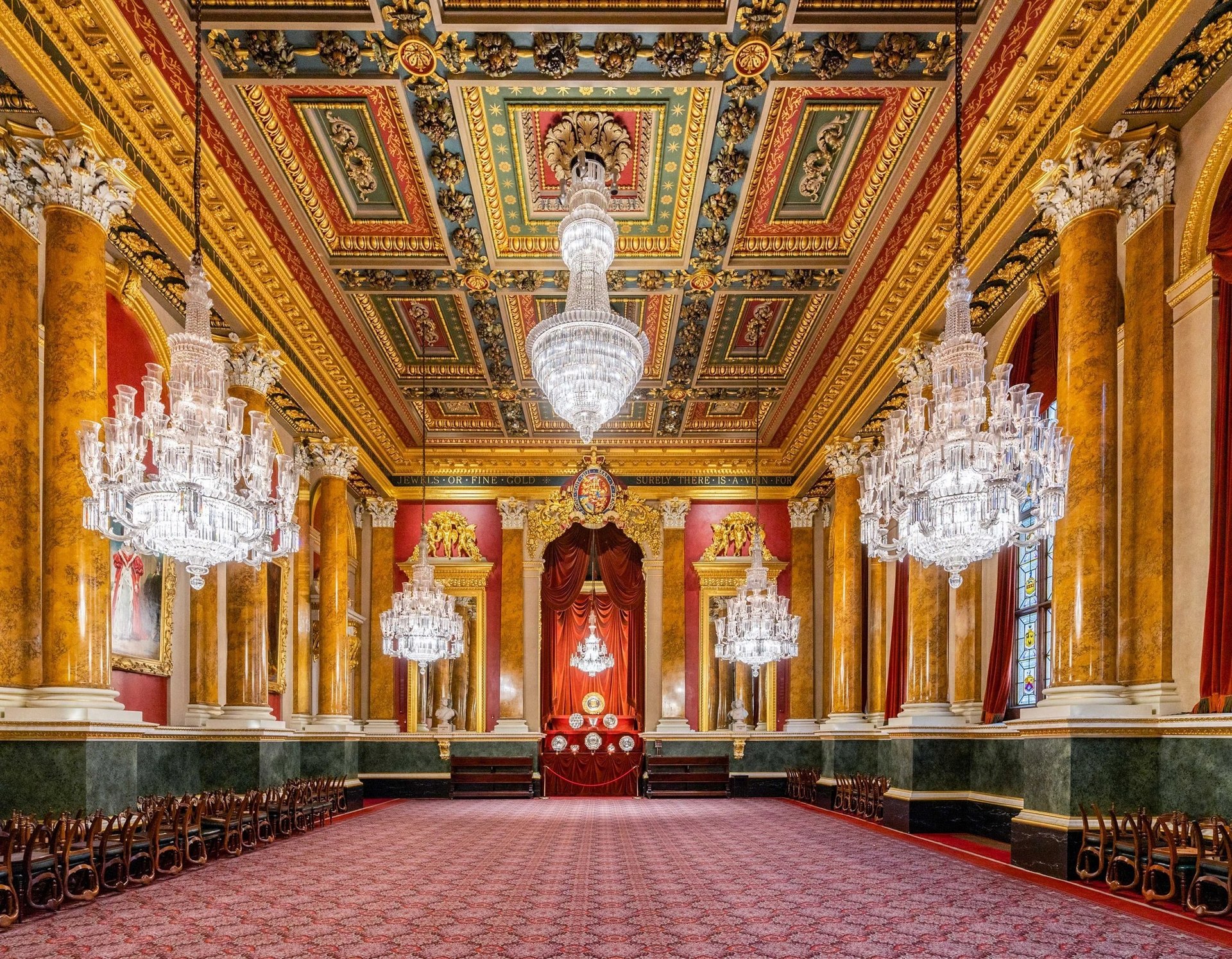
Photo Credit
Image courtesy of © the Goldsmiths’ CompanyThe word hallmark comes from here. In 1300 a statute charged the Goldsmiths’ “Guardians of the Craft” with testing gold and silver and striking it with the leopard’s head, the start of hallmarking in Britain, and the London Assay Office still hallmarks at the Hall today.
The Company has owned its Foster Lane site since 1339, when nineteen goldsmiths bought it; Philip Hardwick’s Grade I listed hall, the third, opened with a grand banquet in July 1835. It is not regularly open to the public, but in 2026 the Company offered guided tours of its principal rooms.
Three routes: through service (the Company’s apprenticeship scheme), by redemption (a standard application) or by patrimony; applicants usually join as Freemen before progressing to the livery. More than 1,500 members.
A leopard’s head
Turn over a piece of London silver and you may find a tiny leopard’s head, a mark that has been struck on precious metal here since 1300. That year a statute of Edward I required gold and silver to meet a defined standard and charged the “Guardians of the Craft” to test it and mark it with the leopard. It was the first legal recognition of the Goldsmiths’ Company, and the beginning of hallmarking in Britain.
The guild is older still. The Pipe Roll of 1179–80, the earliest surviving reference to the City companies, lists eighteen guilds fined by Henry II for operating without a licence. The goldsmiths head the list, with a fine of 45 marks, far higher than any other. The first entry in the story of London’s great companies, then, is a penalty, and the Goldsmiths paid the most.
The first royal charter followed in 1327, with St Dunstan as patron saint, and the Company is one of the Twelve Great Livery Companies of the City. A “goldsmith” has always meant a worker in both gold and silver; today the word stretches to platinum and palladium too.
Seven centuries on Foster Lane
In 1339 nineteen goldsmiths bought a property at the north end of Foster Lane for the Company’s use. Though enlarged since, it is the same site on which Goldsmiths’ Hall stands today, and no other livery company can claim a longer tenure. The second hall, of 1634–36, was the work of Nicholas Stone, with advice from Inigo Jones; the Great Fire of 1666 left only its walls standing.
The Company’s treasures and records survived because an assistant, Sir Charles Doe, commandeered a cart and drove them to a house in Edmonton. The present hall, the third, was designed by the Company’s surveyor Philip Hardwick and opened with a grand banquet in July 1835. It is listed Grade I. In April 1941 a direct hit destroyed its southwest corner; the Portland stone facing was gathered up, stored and put back after the war.
Finances were not always so solid. Through the 17th century, loans demanded by the Crown forced the Company to sell its plate again and again. In 1711, deep in debt, it sold most of what remained and bought twenty tickets in the state lottery. It won nothing. The plate ordered in 1740–41 from Paul de Lamerie and his contemporaries, over 2,300 ounces of it, still shines in the Livery Hall.
The first entry in the story of London’s great companies is a penalty, and the Goldsmiths paid the most.
The marks of trust
A maker’s mark became compulsory in 1363. In 1478 the Company set up the first assay office at the Hall, under a full-time Common Assayer, and introduced the date letter. Craftsmen now had to bring their wares to Goldsmiths’ Hall to be marked, and the “hall-mark” was born. The Company calls it the UK’s oldest form of consumer protection: it tells you where and when a piece was made, and who sent it in.
The London Assay Office still does the work, regularly hallmarking around three million articles a year at the Hall and at sites in Hatton Garden and at Heathrow. Each year it also hosts the Trial of the Pyx, a ceremony with medieval roots in which a jury tests coins from the Royal Mint, normally more than 50,000 of them, one from every batch struck. It has been held at Goldsmiths’ Hall since 1871.
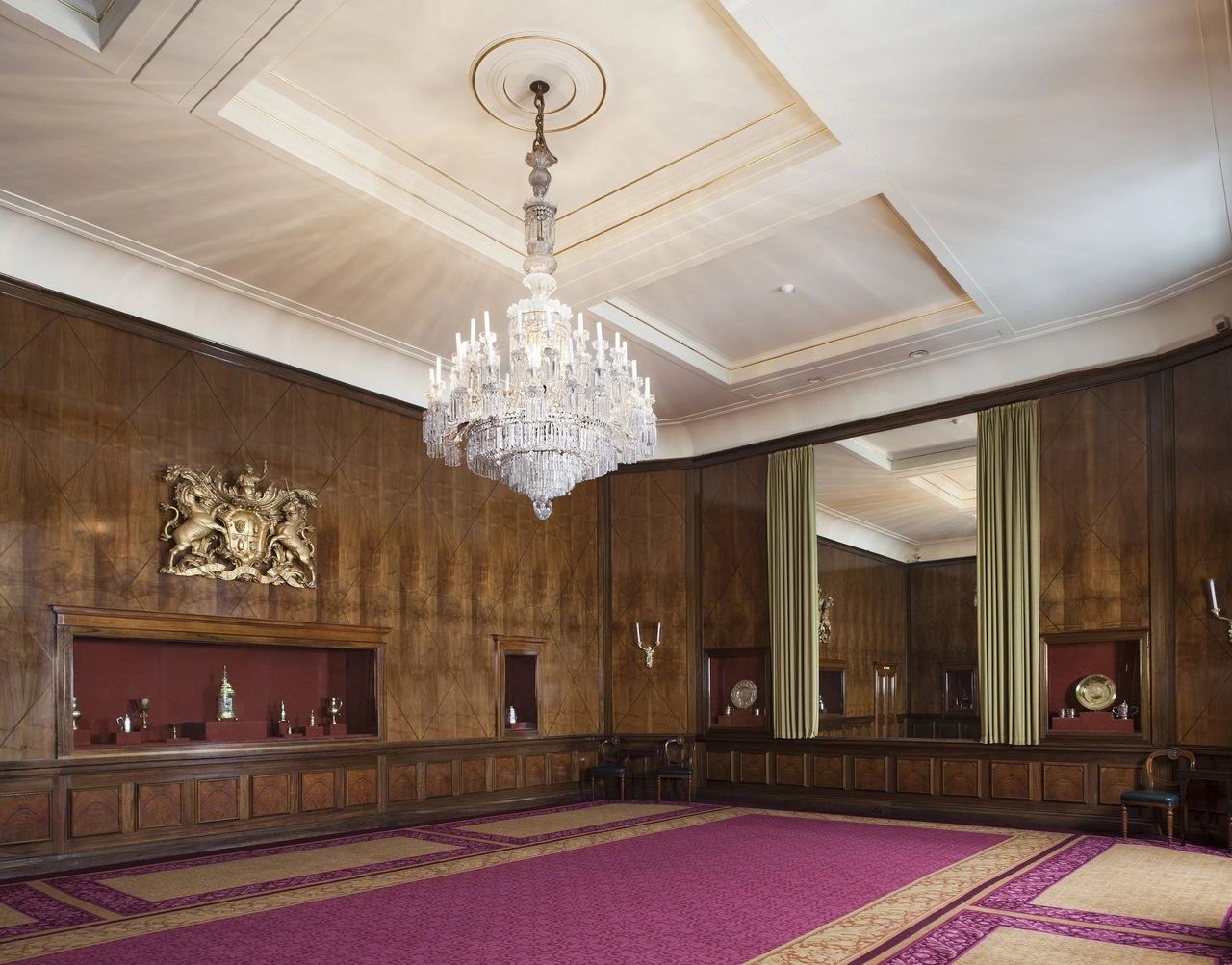
Photo Credit
Image courtesy of © the Goldsmiths’ CompanyBankers, scholars and makers
Here is the surprise. In the 17th century several leading goldsmiths, who had kept “running cashes” to lend to customers, all but gave up making plate to run banking houses, and the promissory notes they issued set the style of Britain’s first bank notes. London’s money, in other words, was minted partly in its jewellers’ back rooms.
The Company also made itself a patron of learning: university scholarships from 1564, a founding role in the City and Guilds of London Institute in 1878, and the New Cross institute that became Goldsmiths’ College in 1904. It opened the Goldsmiths’ Centre in Clerkenwell in 2012, and its selling exhibition, which began in 1976 as “Loot”, grew into the annual Goldsmiths’ Fair.
What next is spelled out in its own news: the UK Assay Offices are examining the future of hallmarking law, and in 2026 commissioned a national survey which found that consumers value the hallmark once they understand it. Seven centuries on, the leopard still has work to do.
Our advice: the Hall is not regularly open, but the Company runs occasional 60-minute guided tours of its principal rooms with its librarians, archivists and curators, at £10, with a limit of two tickets per booking; 2027 dates, including 18 January and 15 March, are on its What’s On page, and there are no private group tours. To date an old piece of silver, ask the Company’s Library and Archive team, who help trace historic hallmarks.
At a glance
Address: Goldsmiths’ Hall, Foster Lane, London EC2V 6BN
Website: thegoldsmiths.co.uk
Telephone: +44 20 7606 7010
Why it's on our list
- First royal charter 1327; one of the Twelve Great Livery Companies
- Same Foster Lane site since 1339; present hall completed 1835
- Home of hallmarking: the London Assay Office’s mark is a leopard
Location
The map comes from Google Maps, which sets its own cookies once it loads.
More in depth
 The long readPrivate members’ clubs: the rooms behind the doorsChocolate houses, Pall Mall palazzos, Soho’s late nights and Rotary lunches: London’s club life.
 MEMBERS’ CLUB · SOHO · SINCE 1985The Groucho ClubSoho’s creative members’ club on Dean Street, home to writers, artists and late nights since 1985.
 MEMBERS’ CLUB · SOHO · OPENED 1995Soho House 40 Greek StreetThe original Soho House: a Grade II-listed Georgian townhouse above Cafe Boheme, opened in 1995.