Objects of Desire
A pig, two kissing roofs and a vertical city
Battersea’s chimneys, Coal Drops Yard’s kissing roofs and The Shard’s vertical city. No prices.
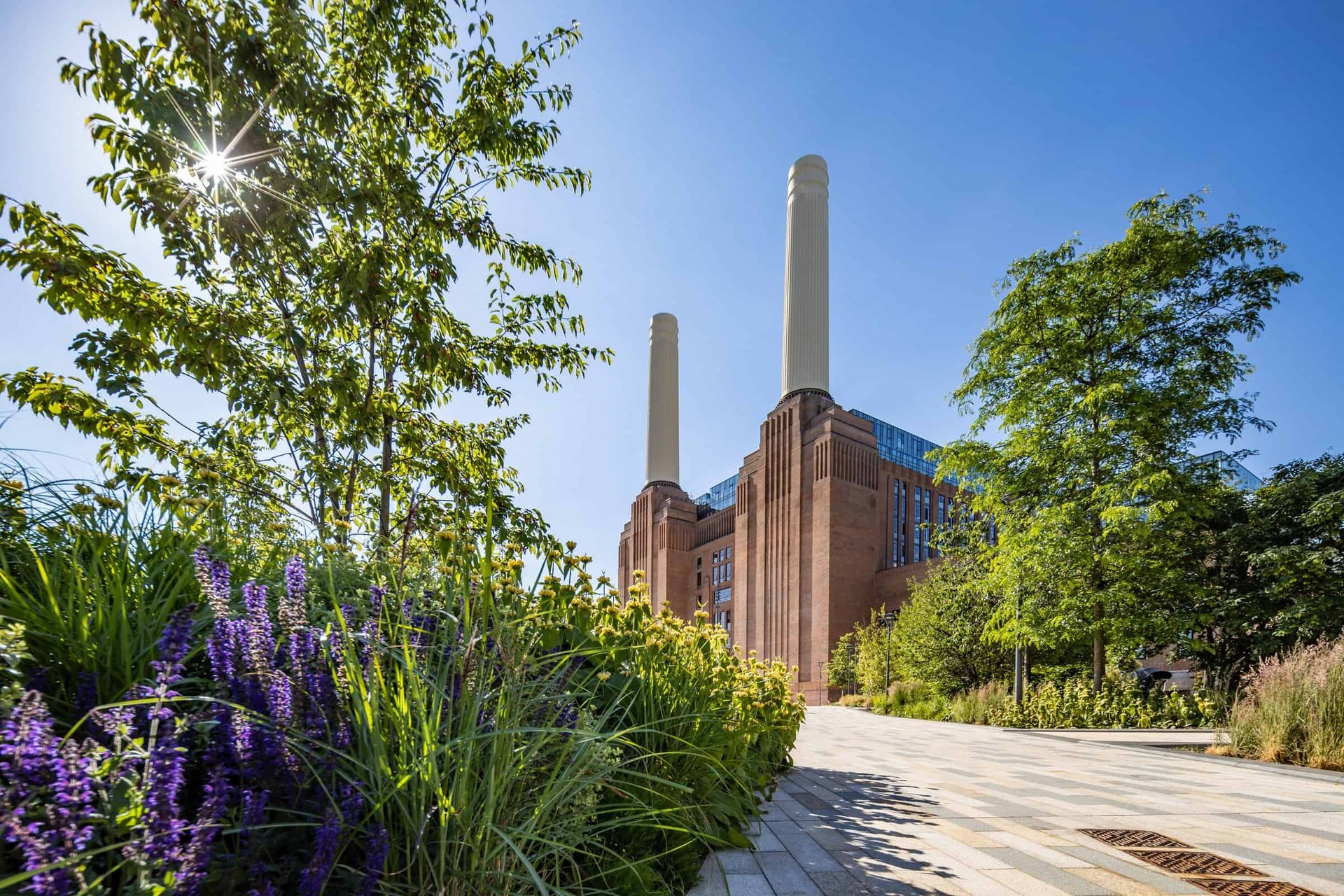
Photo Credit
Image courtesy of © Battersea Power StationWhat does it take to give an industrial giant a second life, or to stack a city upwards? London has answered three ways: a power station turned into shops and homes, Victorian coal warehouses with new roofs, and a tower of offices, hotel and homes. Here is how each works, from the owners’ and architects’ own pages, checked in November 2026. No prices, only buildings.
Four chimneys and a pig
Work on Battersea Power Station began in 1929. Sir Giles Gilbert Scott, the architect of Britain’s red telephone boxes, joined the project, and the first proposals had square chimneys rather than round ones. The tops of the western pair stand 101 metres from the ground: 50-metre chimneys on 51-metre wash towers.
The fourth chimney came in 1955, completing the second stage. The Boiler House, the owners note, is so vast that St Paul’s Cathedral would fit inside. In the war RAF pilots used the white plumes to find their way home in the mist; the Luftwaffe used them too, which, the owners suggest, is why the building escaped heavy bombing.
It is worth remembering what the building was for. Every cubic metre of that cathedral-sized shell was designed around machinery, not people, which is what makes its second life as shops, restaurants, offices and homes so striking: few conversions start with quite so much room to think.
Then came the pig. In 1977 an inflatable pink pig floated between the southern chimneys for the cover of Pink Floyd’s Animals, slipped its moorings, rose into the Heathrow flight path and was tracked by police helicopters until it came down off the coast of Kent. Few listed buildings can claim a livestock escape in their history.
In 1983 the building was upgraded to Grade II*, a category that covers less than 6 per cent of listed buildings. The chimneys were later taken down and rebuilt to full height, and the station reopened in 2022 with shops and restaurants in its turbine halls, new homes around it and the Chimney Lift inside the north-west chimney.
Two roofs that meet
At King’s Cross, Coal Drops Yard began in 1850 as a pair of long brick and cast-iron warehouses built to receive coal for London as it arrived by rail from the North of England. Later they held light industry, storage and nightclubs, and by the late 1990s they had fallen out of use.
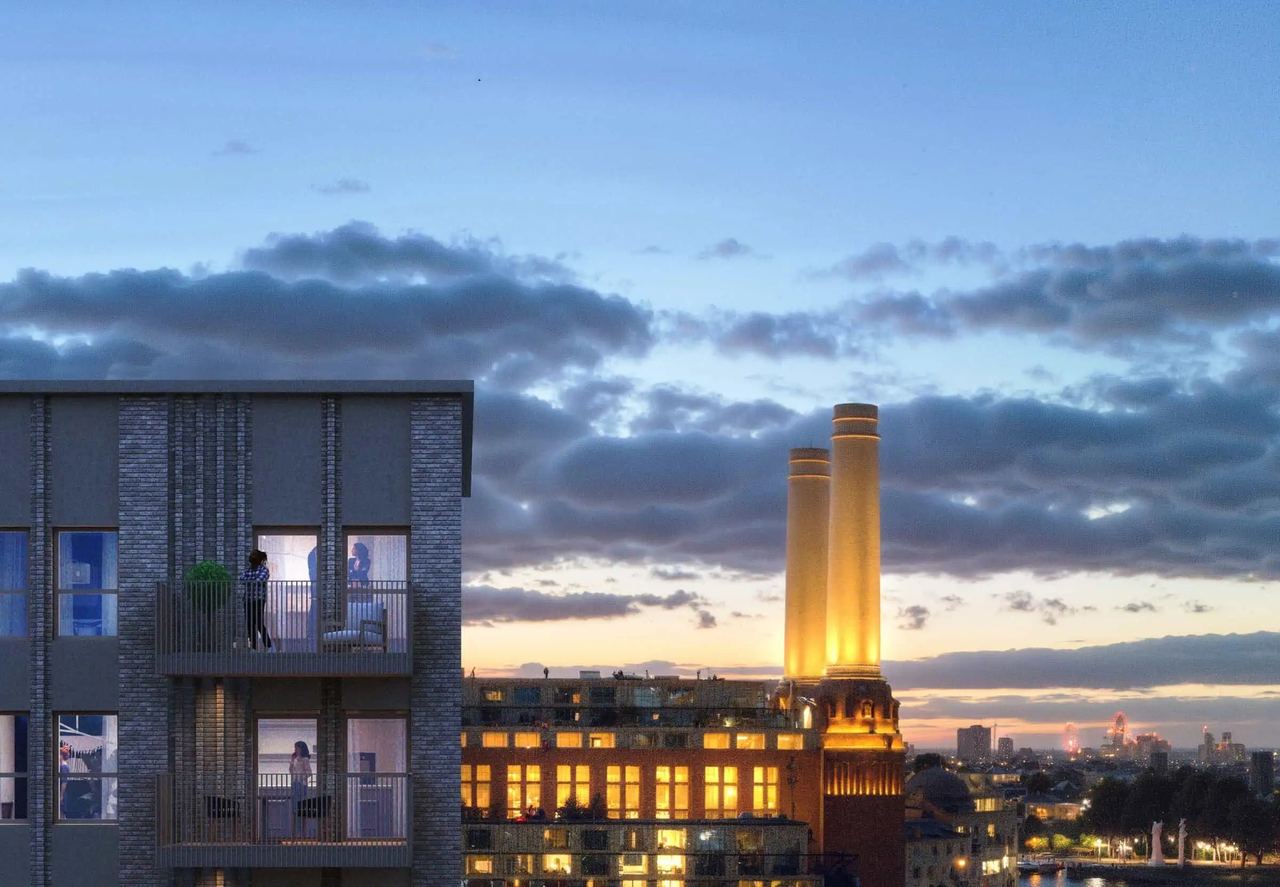
Photo Credit
Image courtesy of © Battersea Power StationHeatherwick Studio’s answer, completed in 2018, was to restore the Victorian buildings and their cobbled yard, then let the gabled roof of each rise and stretch towards the other until they meet, forming a new upper storey. The studio itself calls them kissing roofs: an unusually romantic word for a roof. Beneath, a sheltered double-height space can host concerts and performances.
an unusually romantic word for a roof.
The details reward a slow walk. The new glazed level gives an unexpected raised view over King’s Cross, and the studio designed even the lift buttons, it says, to bring moments of delight. Below, the restored brick and cast iron still carry the marks of a working railway yard, which is rather the point: the coal has gone, the architecture has stayed.
A city stacked upwards
At London Bridge, the architect Renzo Piano and the developer Irvine Sellar imagined The Shard as a vertical city. Offices fill levels 2 to 28, restaurants and bars levels 31 to 33 and the Shangri-La hotel levels 34 to 52, with private residences and The View from The Shard, the UK’s highest viewing gallery.

Photo Credit
Image courtesy of © Acabashi · CC BY-SA 4.0 via Wikimedia CommonsPiano liked the site because it sat where several transport lines cross, and argued that a tower could add life to a city without adding traffic. London Bridge station is directly below, which makes The Shard one of the few London addresses where the commute can begin in a lift.
Our advice: ride the Chimney Lift at Battersea towards dusk, walk the upper level at Coal Drops Yard on a weekday, and book The View from The Shard for a clear evening. For homes to buy or rent, our Property pages list the agents; the prices are theirs to give.
Why it's on our list
- Four chimneys and a pig
- Two roofs that meet
- A city stacked upwards
Location
The map comes from Google Maps, which sets its own cookies once it loads.
More in depth
 Objects of DesireSixty millilitres and a buried shaker: London and the MartiniThe IBA’s Dry Martini, the Savoy’s buried shaker, Dukes’ frozen glasses and a Mayfair trolley.
 Objects of DesireLess parked than crouched: the electric Jaguar and the new supercarsJaguar’s Type 00 and Type 01, Ferrari’s first electric car and the record-breakers around them.
 Objects of DesireCrouched on Berkeley Square: London’s hypercar mileBerkeley Square’s showrooms, the airman who founded H.R. Owen, and the veteran run at dawn.