FREEMASONRY · COVENT GARDEN · OPEN TO VISITORS
Freemasons’ Hall
The Art Deco home of English Freemasonry, with a free museum and public guided tours.
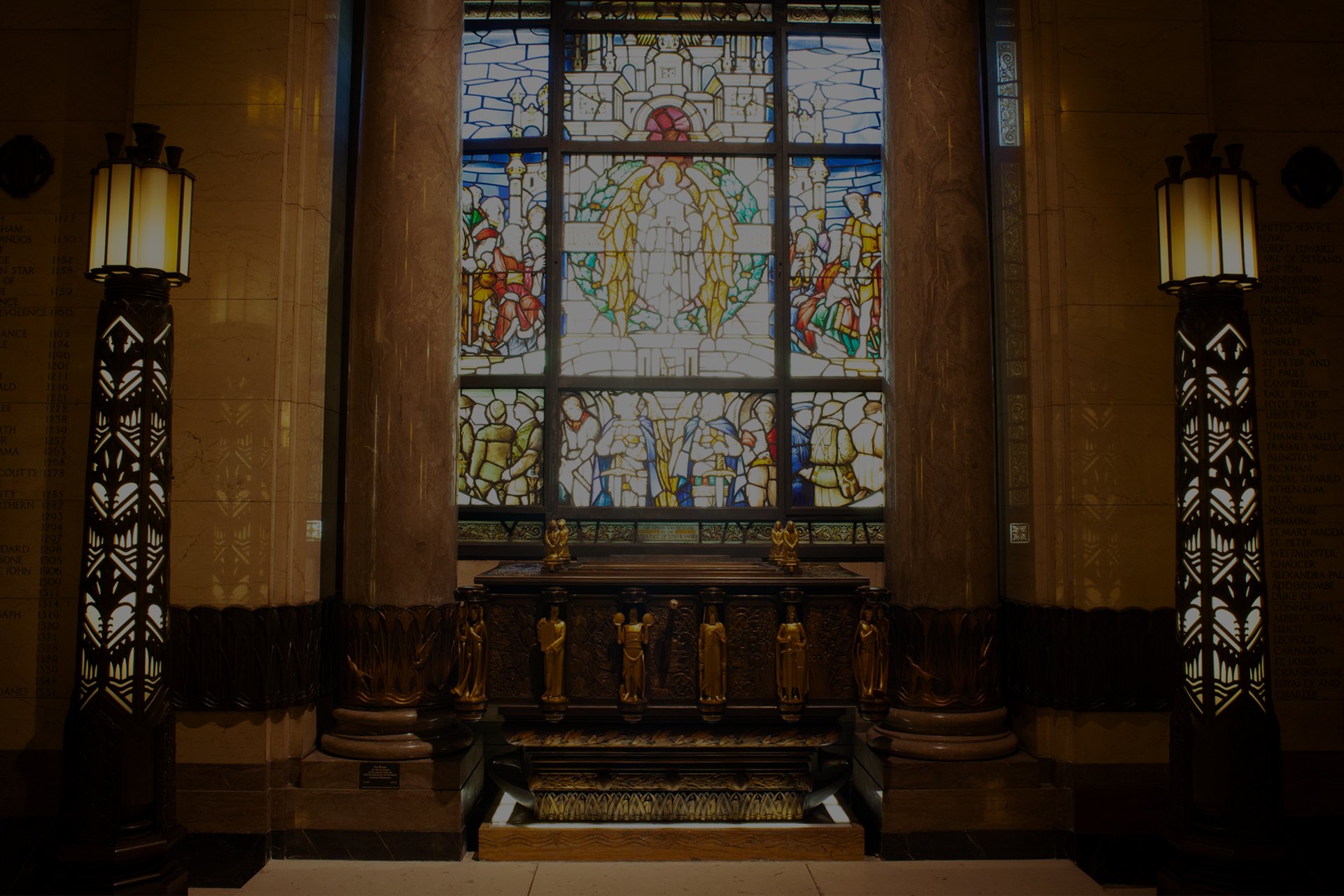
Photo Credit
Image courtesy of © the Museum of FreemasonryFreemasons’ Hall on Great Queen Street is the headquarters of the United Grand Lodge of England and one of only a few Art Deco buildings in London still used for its original purpose. It is the third hall on the site since 1775. Unlike most clubs, its doors open to the curious: the Museum of Freemasonry is free, and 55-minute guided tours trace the story from the first Grand Lodge of 1717.
A memorial in Art Deco
Turn the corner from Drury Lane into Great Queen Street and Freemasons’ Hall rises above the theatres like a great liner that has berthed in Covent Garden and decided to stay. It is the headquarters of the United Grand Lodge of England, home of the Museum of Freemasonry, and one of only a few Art Deco buildings in London still used for the purpose it was built for. More than 200,000 people walk through its doors each year.
It was built between 1927 and 1933 as a memorial to the more than 3,000 Freemasons who died in the First World War, and for many years it was known as the Masonic Peace Memorial. The Masonic Million Memorial Fund was set up in 1919; an international competition in 1925 was won by the partnership of H. V. Ashley and Winton Newman, with a design based on a massive steel frame.
Lunch for 7,250
The fundraising had a theatrical flourish of its own. On 8 August 1925 some 7,250 members sat down to lunch at Olympia, which UGLE describes as still the largest catered meal ever served in Europe. By the end of lunch, more than £825,000 had been pledged to the building fund.
Two years later, on 14 July 1927, more than 6,000 Freemasons in the Royal Albert Hall watched the Grand Master lay a dummy foundation stone, while the real one, triggered by an electrical relay, was lowered into place on the corner of Great Queen Street. Remote ceremonies, it seems, are older than we like to think. On 19 July 1933, 5,353 members filled the finished hall to see it dedicated by the Grand Master, HRH The Duke of Connaught.
Three halls since 1775
This is the third Masonic hall on the site. The Premier Grand Lodge bought a tavern with a garden here in 1774; Thomas Sandby won the competition for a Grand Hall, dedicated on 23 May 1776. It became a fixture of London social life: concerts, balls, literary evenings. Sir John Soane remodelled it in the 1820s, and a part of Frederick Pepys Cockerell’s classical extension of 1862–69 still fronts the Connaught Rooms.
Inside today’s hall, the Grand Temple is the set piece: mosaics, stained glass and a Henry Willis & Sons organ of 2,220 pipes and 43 stops, restored in 2014. Since 1985 the building has been fully open to the public and to non-Masonic events, and it has become a favourite location for film and television. Memorials to Freemasons awarded the Victoria Cross were unveiled in 2017 and 2019.
From an alehouse by St Paul’s
UGLE itself notes that Freemasonry’s origins remain the subject of “intense speculation”; the general view among Masonic scholars is that its roots lie with the medieval stonemasons who built castles and cathedrals. The first recorded initiation of an English speculative mason is Elias Ashmole’s, in a lodge in Warrington in 1646.
In 1927 the foundation stone was laid by electrical relay from the Royal Albert Hall, while 6,000 Freemasons watched a dummy.
London is where it was organised. On St John’s Day, 24 June 1717, four London lodges met at the Goose and Gridiron alehouse in St Paul’s Churchyard and declared themselves a Grand Lodge, the first anywhere in the world. Its first rulebook, the Constitutions of 1723, set out the Enlightenment principles that still underpin the fraternity.
In 1751 a rival Grand Lodge appeared in London: the “Antients”, who labelled the older body the “Moderns”. The two existed side by side for nearly 63 years, neither recognising the other, before uniting on 27 December 1813 as the United Grand Lodge of England. Six decades to settle a difference of practice: patience, here, is a craft skill too.
Before the welfare state, Freemasonry built charities to look after members and their families; today it supports causes well beyond its own ranks. Its guiding principles are Integrity, Friendship, Respect and Service. The fraternity grew fast after both world wars: more than 350 new lodges in the three years after the first, nearly 600 after the second, many founded by servicemen wanting to keep their friendships alive.
Freemasonry in London today
UGLE governs Freemasonry in England, Wales, the Channel Islands, the Isle of Man and districts overseas, with around 170,000 members; its Grand Master is HRH The Duke of Kent. Since 2003 the capital’s lodges have had their own Metropolitan Grand Lodge, created because London’s numbers had outgrown the old arrangement. Women Freemasons have two Grand Lodges of their own, and a Council for Freemasonry now links all three.
What the hall says about London is telling. A fraternity organised in a City alehouse now keeps open house in theatreland, with a museum, a shop and a bar where anyone can order a coffee. The building that was once a closed memorial has become one of the more generous public interiors in the West End.
Our advice: the Museum of Freemasonry is free and open Tuesday to Saturday, 10:00–17:00 (closed 24 December 2026 to 5 January 2027). The 55-minute public tours run Tuesday to Saturday at 11am and 2pm, from £14, with 25 places each; book online, and choose the Grand Temple tour if that is the room you want, as it is a working building. Afterwards, the Goose and Gridiron bar and café on the ground floor is open to everyone.
At a glance
Address: 60 Great Queen Street, London WC2B 5AZ
Website: museumfreemasonry.org.uk/tours
Telephone: +44 20 7395 9265
Why it's on our list
- Art Deco landmark, still used as built
- Free Museum of Freemasonry
- Public tours Tuesday to Saturday
- Membership: Visitors can join public guided tours, Tuesday to Saturday at 11am and 2pm, from £14 per person (November 2026); museum entry is free.
Location
The map comes from Google Maps, which sets its own cookies once it loads.
More in depth
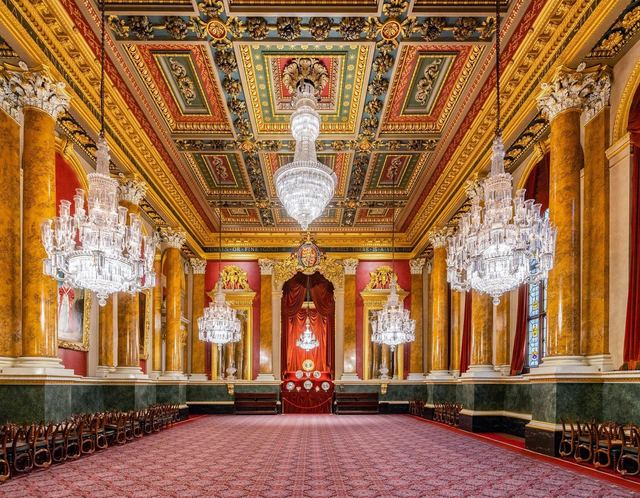 LIVERY COMPANY · CITY OF LONDON · CHARTER 1327The Goldsmiths’ CompanyGreat Twelve company on its Foster Lane site since 1339, where hallmarking began.
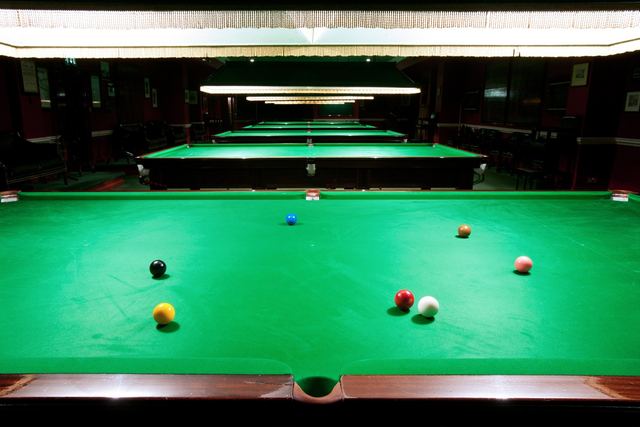 The long readPrivate members’ clubs: the rooms behind the doorsChocolate houses, Pall Mall palazzos, Soho’s late nights and Rotary lunches: London’s club life.
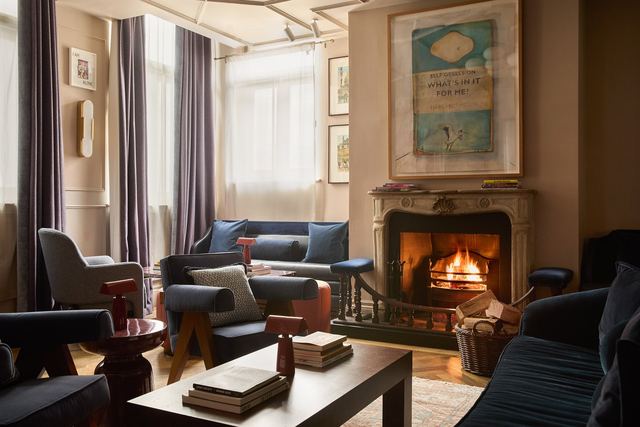 MEMBERS’ CLUB · SOHO · SINCE 1985The Groucho ClubSoho’s creative members’ club on Dean Street, home to writers, artists and late nights since 1985.