CHARITY · REGISTERED 1160024
Great Ormond Street Hospital Children’s Charity (GOSH Charity)
The charity behind London’s famous children’s hospital, which opened on Valentine’s Day 1852.
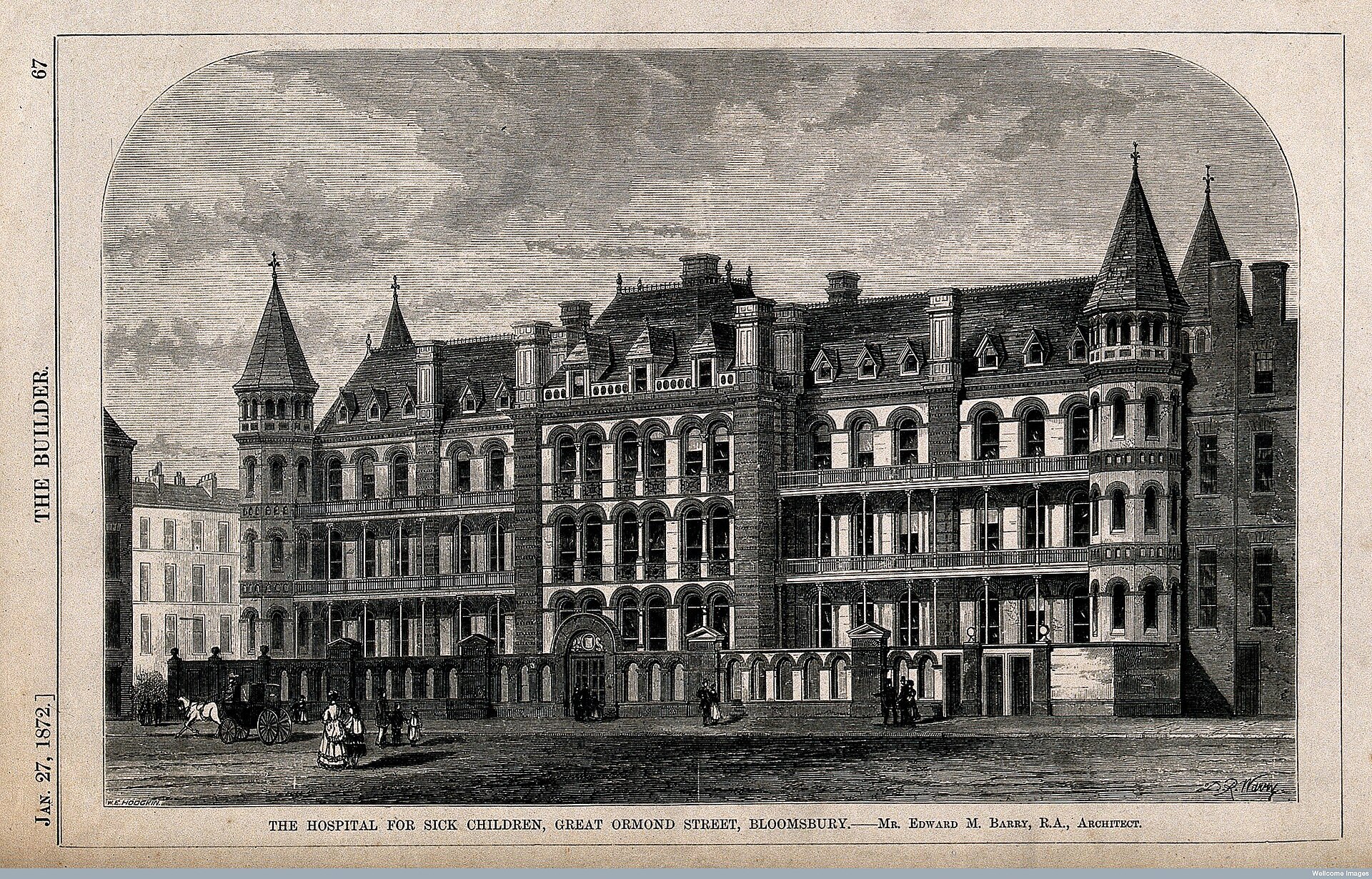
Photo Credit
Image courtesy of © Wellcome Images · CC BY 4.0 via Wikimedia CommonsGreat Ormond Street Hospital opened on Valentine’s Day 1852 with just 20 beds and has depended on charitable support ever since. Its charity funds rebuilding, research, equipment and family support for the hundreds of children treated there every day. Its most famous donor never wrote a cheque: in 1929 J. M. Barrie gave the hospital the rights to Peter Pan, so every UK performance of the play still helps. Few gifts have aged so gracefully.
GOSH Charity lists one-off and monthly donations, gifts in Wills, its lottery and raffle, gifts in memory, fundraising events and challenges, school and corporate fundraising, philanthropy and volunteering opportunities; it also accepts donated toys and gifts for children at the hospital.
Twenty beds on Valentine’s Day
Great Ormond Street Hospital first opened its doors on Valentine’s Day in 1852, with just 20 beds. Today it is one of the world’s leading children’s hospitals, treating hundreds of seriously ill children from all over the UK every day, many of them with rare or complex conditions. From the start it relied on charitable support, and it still does for the extras that turn good care into exceptional care.
Great Ormond Street Hospital Children’s Charity, known as GOSH Charity, is the organisation that raises that money. Its own description of its aim is unusually plain-spoken for a medical charity: to give seriously ill children childhoods that are “fuller, funner and longer”. The grammar may be cheerful, but the purpose behind it is serious, and the hospital’s long history shows how much depends on it.
The boy who never grew up
The hospital’s most celebrated benefactor is J. M. Barrie, born in Scotland on 9 May 1860. In 1897 he met the Llewelyn Davies family in Kensington Gardens, and the boys are widely believed to have inspired the Lost Boys. In 1929 the hospital asked him to sit on a committee to help buy land for a new wing. He declined, saying he hoped to find another way to help.
Two months later, the hospital’s board learned what he had meant: Barrie had given the rights to Peter Pan to GOSH. Nearly a century on, all UK performances of Peter Pan, from theatre productions to school plays and pantomimes, support GOSH Charity. There is a pleasing symmetry in a story about a boy who refuses to grow up helping real children to do exactly that.
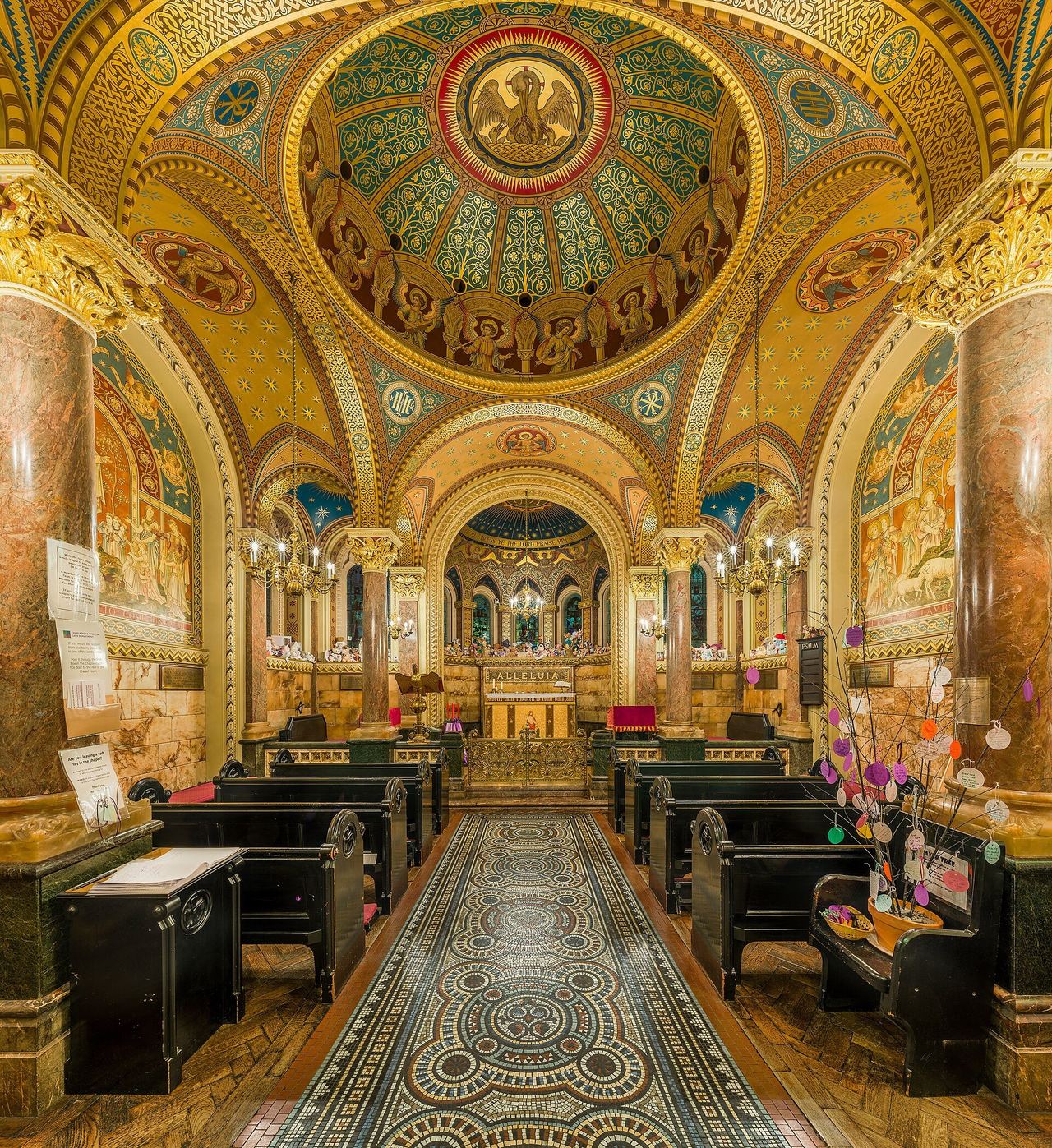
Photo Credit
Image courtesy of © Diliff · CC BY-SA 3.0 via Wikimedia CommonsWhat the money does today
GOSH Charity funds several kinds of work. It pays for rebuilding and refurbishment, so that wards and clinical spaces keep pace with modern medicine. It funds research into children’s health, cutting-edge medical equipment and technology, and support for patients, families and staff. It is also raising money for the hospital’s Children’s Cancer Centre, one of its current major projects.
The Charity Commission register shows total income of £140,352,000 for the financial year ending 31 March 2025. Behind that figure sit donors, fundraisers, schools and companies. The register lists the charity’s purpose simply as the advancement of health or saving of lives, which, in a children’s hospital, is less a slogan than a daily timetable.
Its most famous donor never wrote a cheque: J. M. Barrie gave the hospital Peter Pan, and the boy who never grew up has been helping children ever since.
The charity is clear that its reach goes beyond the building. It says it works for the children treated at GOSH, for children with rare or complex diseases everywhere, and “for this generation and all those to come”. Research funded in Bloomsbury can change treatment far away, which is why a donation here travels further than most.
A London institution
The hospital sits in Bloomsbury, a short walk from Russell Square and the British Museum, and its name has long been a byword for children’s medicine. Visitors should remember that it is a working hospital, not an attraction, and that families there are often having the hardest weeks of their lives. The kindest thing a passer-by can do is give, and give the families their privacy too.
The charity itself is based nearby, at 40 Bernard Street. For travellers, the most enjoyable way to support it may be the one Barrie chose: watch Peter Pan. Any UK production you see, in the West End or in a village hall, sends something back to the hospital. It is surely one of the few theatre tickets that can be justified as a charitable act.
How to help
GOSH Charity lists a wide range of ways to support it: one-off or monthly donations, gifts in Wills, its lottery and raffle, gifts in memory of someone, fundraising events and challenges, school and corporate fundraising, and philanthropy. It also runs volunteering opportunities and accepts donated toys and gifts for children staying at the hospital, following the guidance on its website.
Our advice: give through gosh.org rather than through street collectors you cannot verify, and if you donate toys, check the charity’s current guidance first. Then book a ticket to Peter Pan whenever one is playing; J. M. Barrie arranged it so that an evening at the theatre still helps a sick child.
At a glance
Address: 40 Bernard Street, 2nd Floor, London WC1N 1LE
Website: gosh.org
Registration: Registered charity in England and Wales no. 1160024
Why it's on our list
- The hospital opened on Valentine’s Day 1852 with 20 beds
- J. M. Barrie gave GOSH the rights to Peter Pan in 1929
- Total income of £140.4 million in the year to 31 March 2025 (register)
Location
The map comes from Google Maps, which sets its own cookies once it loads.
More in depth
 CHARITY · REGISTERED 219279 · FOUNDED 1921The Royal British LegionThe Armed Forces charity behind the Poppy Appeal, supporting veterans and families since 1921.
 The long readPrivate members’ clubs: the rooms behind the doorsChocolate houses, Pall Mall palazzos, Soho’s late nights and Rotary lunches: London’s club life.
 MEMBERS’ CLUB · SOHO · SINCE 1985The Groucho ClubSoho’s creative members’ club on Dean Street, home to writers, artists and late nights since 1985.