Walks · Our pick in London
Westminster and Whitehall
From the river to Parliament
Cleopatra’s Needle, Trafalgar Square, Whitehall and the Cenotaph, Parliament and the war museums.

Photo Credit
Image courtesy of © Domob · CC BY-SA 4.0 via Wikimedia Commons
Photo Credit
Image courtesy of © Diliff · CC BY-SA 3.0 via Wikimedia Commons
Photo Credit
Image courtesy of © Tristan Surtel · CC BY-SA 4.0 via Wikimedia Commons1 / 3
About Westminster and Whitehall
Whitehall is short, and dense with ceremony. This walk starts on the river with an obelisk older than Cleopatra herself, climbs to Trafalgar Square, then follows Whitehall past the Horse Guards, the Banqueting House and the Cenotaph to Parliament Square, with the underground war rooms and the Imperial War Museum for those who want the 20th century in depth.
Our take
- Cleopatra’s Needle
- Trafalgar Square
- The Cenotaph
- Parliament and Big Ben
- Address
- Victoria Embankment, London
Westminster, London
Plan your visit
Start at Embankment station and finish at Westminster; the walk itself is about a mile and a half, flat all the way. The streets, squares and memorials are open to all; Parliament’s tours and the Churchill War Rooms are ticketed, so book them ahead.
Downing Street is closed to the public behind security gates on Whitehall; you can see the street through the gates, and that is as close as visitors get. The Imperial War Museum in Lambeth is free and needs no booking, about half an hour’s walk across the river from Parliament.
- Houses of Parliament tours
- Saturdays all year; Monday to Saturday during parliamentary recess. Guided tour £40 adult in advance (£43 on the day); audio tour £31 (£34) Book Checked 25 November 2026 · UK Parliament: tour prices
- Churchill War Rooms
- Daily 9.30am–6pm, last entry 5pm; closed 24–26 December. Adult £34; under-fives free Book Checked 25 November 2026 · IWM: Churchill War Rooms
- Imperial War Museum London
- Free, no booking needed. Daily 10am–6pm; closed 24–26 DecemberChecked 25 November 2026 · IWM: IWM London
The walk: Embankment to Westminster
About a mile and a half, with stops. Allow a morning; longer with the War Rooms or a tour.
Cleopatra’s Needle
From Embankment station, walk a few steps along the river to the obelisk and its two bronze sphinxes.
Trafalgar Square
Up Villiers Street or Craven Street to the square. Nelson’s Column went up in 1843, the fountains in 1845 and Landseer’s bronze lions in 1867. Look for the Fourth Plinth’s latest commission in the north-west corner.
Horse Guards and the Banqueting House
South down Whitehall. The mounted sentries of the Household Cavalry stand at Horse Guards; opposite is the Banqueting House.
Downing Street
On the right, behind security gates. You can look along the street from Whitehall; there is no public access.
The Cenotaph
In the middle of Whitehall. Pause here: this is the national memorial, raised first for the dead of the First World War.
Churchill War Rooms
Turn right into King Charles Street to Clive Steps for the underground wartime headquarters, left as they were in 1945.
Parliament Square and the Elizabeth Tower
Back to Whitehall and on to Parliament Square, with Westminster Abbey on one side and the Palace of Westminster on the other. Finish on Westminster Bridge for the classic view of Big Ben.
Across the river: Imperial War Museum (optional)
About half an hour on foot through Lambeth to the museum on Lambeth Road. Free, six floors, and open until 6pm.
The memorial that began as canvas and plaster
The Cenotaph takes its name from the Greek for an empty tomb. It commemorates the 1.1 million dead of Britain and the Empire in the First World War, whose remains lie across the globe. Sir Edwin Lutyens designed the first one quickly in 1919, in wood and painted canvas, as a temporary salute point for the London Peace Celebrations of 19 July 1919.
More than 1.25 million people came to pay their respects in the first week, and the temporary marker became a national shrine. The permanent Cenotaph, in Portland stone, was ready for Armistice Day 1920. Its only words are THE GLORIOUS DEAD. None of its lines is truly straight: the verticals would meet about 1,000 feet in the air, a refinement most people pass without noticing.
- The Cenotaph
- Designed by Sir Edwin Lutyens in 1919; permanent Portland stone version 1920; Grade I listedChecked 25 November 2026 · Historic England: the Cenotaph
An obelisk that came by sea
Cleopatra’s Needle is older than Cleopatra by well over a thousand years. The pink granite obelisk dates from the reign of Thutmose III and was one of two raised at Heliopolis in Egypt. It was given to Britain and brought to London in 1877 in a specially designed iron casing that went to sea like a vessel, then set on the Embankment between two bronze sphinxes designed by George Vulliamy.
- Cleopatra’s Needle
- From the reign of Thutmose III; brought to London in 1877; Grade I listedChecked 25 November 2026 · Historic England: Cleopatra’s Needle
Our advice
Our advice: walk it on a Saturday morning with a Parliament tour booked for the afternoon, or on a weekday when the War Rooms open at 9.30am and the crowds are thinner. Pass the Cenotaph quietly.
Houses of Parliament Churchill War Rooms Imperial War Museum London The South Bank riverside walk
Opening hours, prices and seasonal openings change, so please check with Westminster and Whitehall before you go.
Last checked: 25 November 2026 How we choose
Location
The map comes from Google Maps, which sets its own cookies once it loads.
Read next
 HealthSt Thomas’ HospitalA major NHS hospital with an emergency department, on the river opposite the Houses of Parliament.
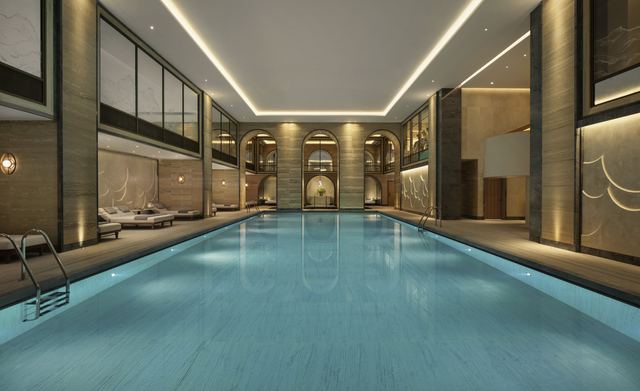 HealthGuerlain Spa, Raffles London at The OWOGuerlain’s spa at The OWO: four floors, a 20-metre pool and VIP suites with soaking tubs.
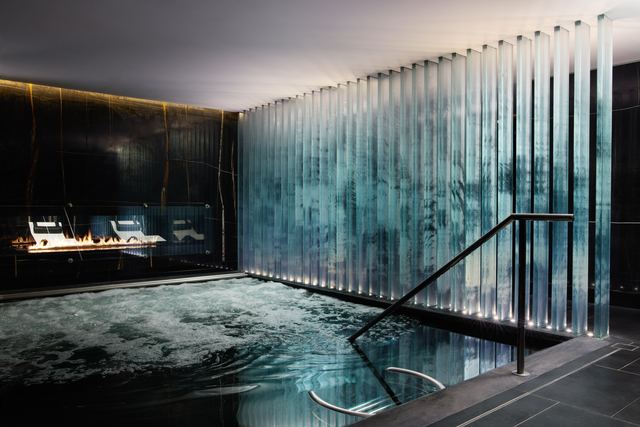 HealthBiome by Corinthia LondonCorinthia’s new spa: a thermal floor of warm pools, steam and sauna, and guided therapies.